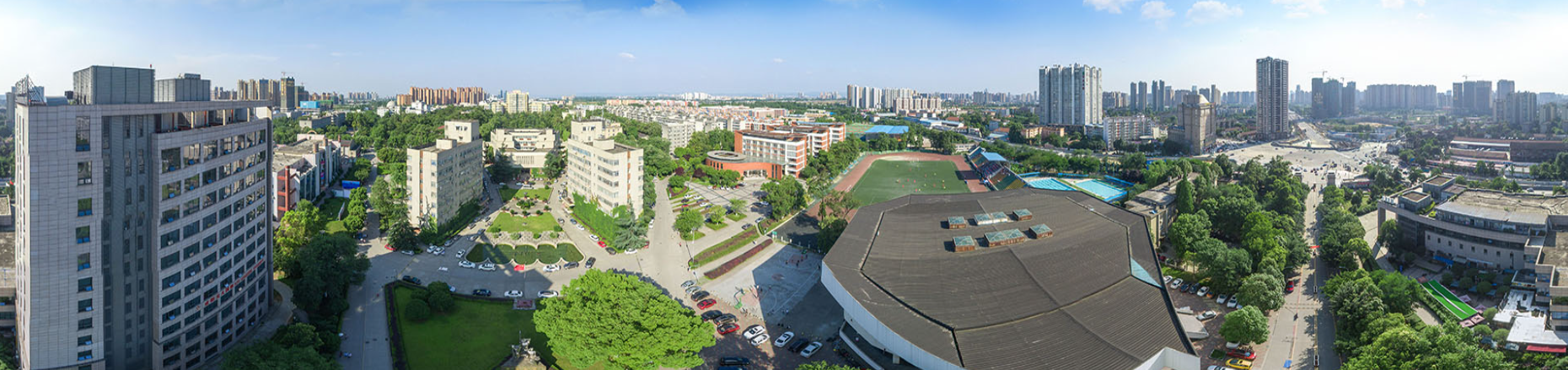
Simulation and Supercomputing Laboratory adheres to the concept of “technology-driven innovation” and gradually develops into a quantitative simulation platform with biogeochemical modeling, big data analysis, and machine learning as the core technologies. It wholeheartedly serves the faculty, students, and research teams of the geoscience-related colleges and disciplines at Chengdu University of Technology, and is open to the public, striving to provide efficient and high-quality simulation and computing services to various collaborative partners and projects. The aim is to meet the growing demand for computational simulations in the field of geochemistry, promote interdisciplinary research and the development of “qualitative analysis to quantitative simulation” techniques in the field of Earth Sciences.
The main services provided by the laboratory include, but are not limited to, the following two aspects: (1) Biogeochemical simulation services aim to help quantitatively analyze geochemical data of elements such as C-S-P-O metals and their isotopes, extract core logic, and establish corresponding models. The models used include, but are not limited to, GROCARB, GEOCARBSULF, COPSE, CORMER, MBOX, and SCION, which can simulate geological elements or surface biogeochemical processes related to global carbon and sulfur cycles, evolution of paleo-oceanic water chemistry, terrestrial chemical weathering and hydrological processes, atmospheric composition evolution, among others. This enables the quantitative and digital representation of biogeochemical cycling dynamics and ecosystem evolution at different temporal and spatial scales in the past or future Earth trajectories. (2) Big data analysis and machine learning aim to utilize the computational power of supercomputers to deeply analyze and explore the potential structural patterns in large-scale and wide-ranging complex geological datasets, as well as the systematic underlying logical relationships between geological elements or entities such as climate, tectonics, stratigraphy, and sedimentation. This provides logical and algorithmic support for various subsequent analyses, simulations, and evaluations. The current hardware specifications being developed in the laboratory include 1 to 32 cores of elastic computing power, a maximum CPU base frequency of 2.6GHz, and a network bandwidth of 100Gbps. The main geological databases used are GEOROC, GEOMAP, SGP, and others.
The laboratory is equipped with experienced technical personnel who provide support for model construction, machine maintenance, and personnel training. It maintains a close cooperative relationship with Professor Benjamin Mills, an internationally renowned simulation geochemist at the University of Leeds, to carry out updates and research and development on fundamental, forward-looking, and cross-cutting simulation technologies.