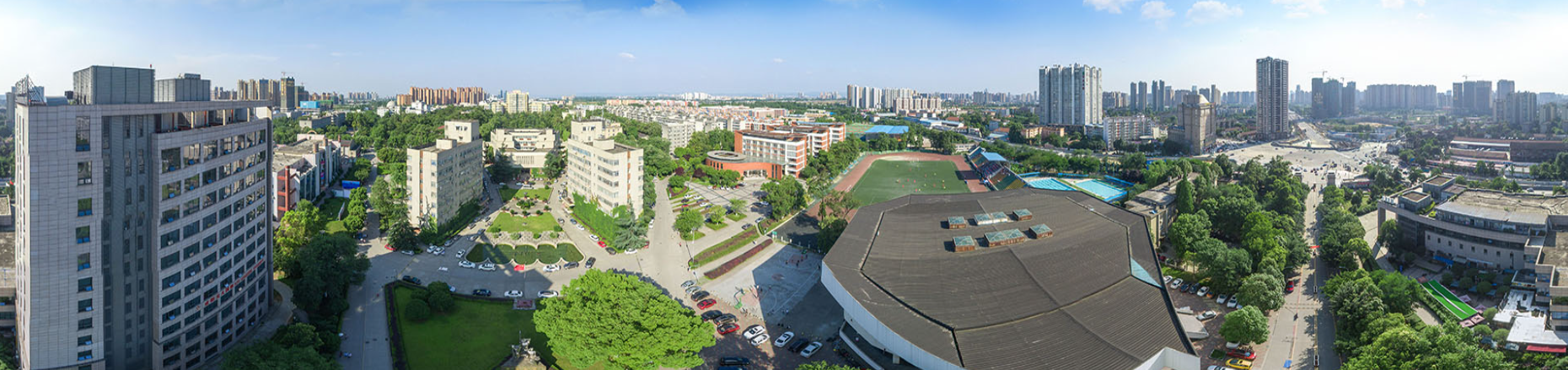
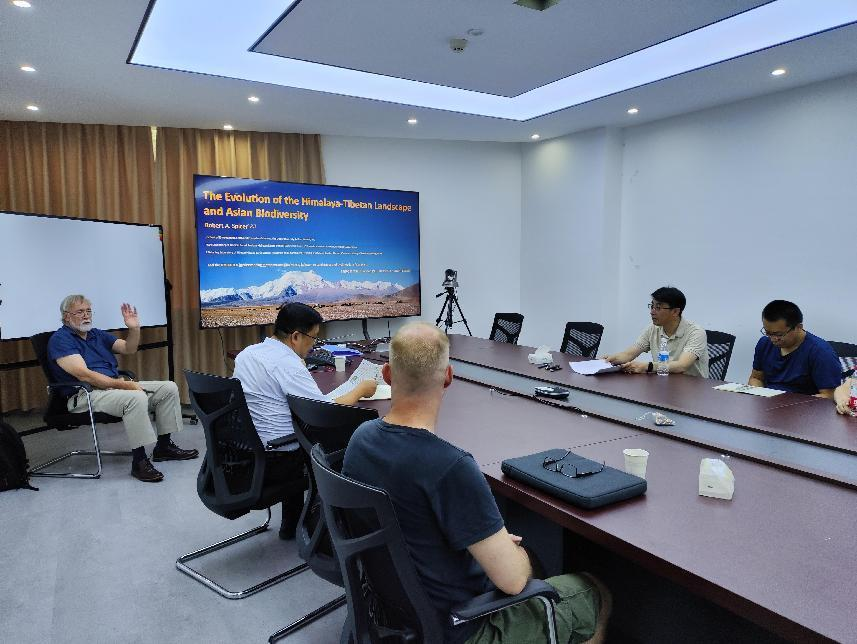
On July 6th, 2023, Professor Robert A. Spicer from The Open University in the United Kingdom, along with his team, visited our university for academic exchange at the invitation of the Institute of Sedimentary Geology. They delivered an academic lecture titled “The Evolution of the Himalaya - Tibetan Landscape and Asian Biodiversity” at Room 424 on the fourth floor of the Water Library.
The lecture was attended by faculty members, graduate and undergraduate students from our institute and other schools. The attendees actively engaged in enthusiastic and in-depth discussions. Prof. Spicer introduced different hypotheses proposed by previous researchers regarding the tectonic movements in the Himalaya-Tibet region and pointed out the lack of interdisciplinary work models based on multiple datasets. He highlighted the main challenges in conducting relevant research in different areas of the Pan Tibetan Highlands (PTH), including misconceptions about geological concepts and confusion in defining geographical data, a lack of absolute age frameworks to link events in time and space, and inadequate development of ancient elevation indicators.
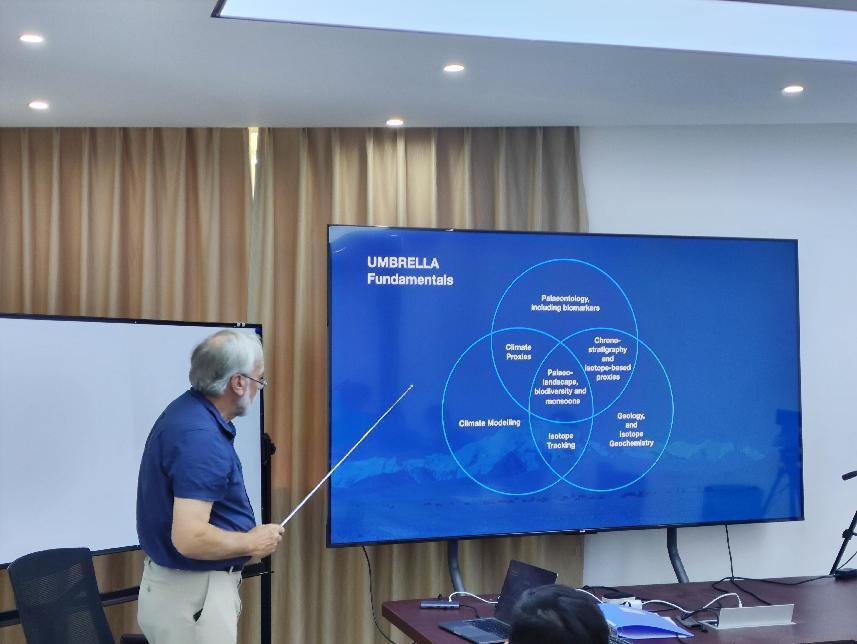
Over the past five years, Prof. Spicer and his team, in collaboration with the UMBRELLA Foundation, have made significant progress in addressing these issues. Their research has involved a series of studies, including the discovery of a large number of fossil assemblages, advancements in radiometric dating data, improvements in ancient elevation indicators, and testing and development of numerical climate models. These efforts have revolutionized our understanding of PTH development. During the lecture, Prof. Spicer systematically presented the recent achievements of his team, discussed the development of the PTH landforms in the Cenozoic era, and explored how changes in PTH topography have influenced the evolution of the Asian monsoon system and biodiversity. He summarized the following five aspects:
First, the PTH landforms have gradually developed over time due to the external forces exerted by India and Asia since about 60 million years ago. Second, during the Paleogene period, many species communities emerged in the central basin of Tibet, forming the unique and highly diverse biological communities in Asia today. Third, in the Eocene, the uplift of the eastern part of Tibet (the Hengduan Mountains) led to a unique winter monsoon climate, which changed the vegetation in most of China. Fourth, in the early and middle Miocene, the central basin of Tibet reached a modern high altitude, forming the present highland topography. Fifth, the uplift of the Himalayas began later and may have surpassed an elevation of 5 km during the middle Miocene, eventually transforming the Asian monsoon system into its current state.
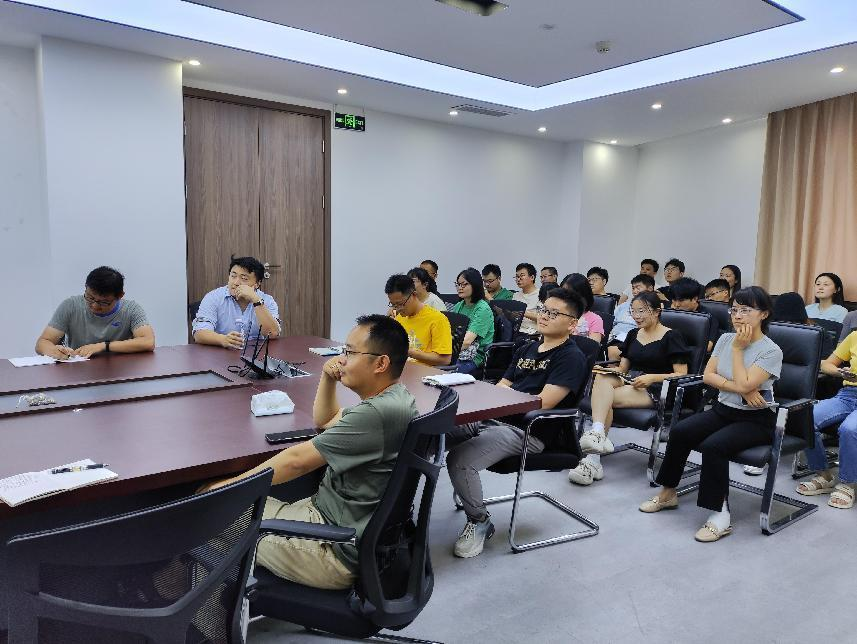
During the exchange session, our faculty and students engaged in enthusiastic discussions with Prof. Spicer on various topics, including new simulation methods, the coverage of modern plant databases, and uplift models in the Qinghai-Tibet Plateau.
Brief bio of Professor Robert A. Spicer:
Prof. Robert A. Spicer is primarily engaged in research on paleo-elevation reconstruction and monsoonal climate evolution in the Qinghai-Tibet Plateau. He has served as Vice Chairman of the International Organisation of Paleobotany and has worked at institutions such as the United States Geological Survey, the University of Oxford, The Open University, the Institute of Botany at the Chinese Academy of Sciences, Sun Yat-sen University, and Xishuangbanna Tropical Botanical Garden of the Chinese Academy of Sciences. He has published over 270 research papers in prestigious international journals such as Nature (3 papers) and Science (2 papers), with a total citation of over 13,000 times. Prof. Spicer has developed and improved the Climate-Leaf Analysis Multivariate Program (CLAMP), which is widely used for paleoclimate reconstruction based on Cenozoic plant communities. He has conducted fieldwork in the Tibetan Plateau for over thirty years, and his research on paleo-elevation reconstruction during the Middle Miocene in southern Tibet is a representative achievement in understanding the formation history of the Qinghai-Tibet Plateau. In recent years, Prof. Spicer, in collaboration with peers from Xishuangbanna Tropical Botanical Garden, the Institute of Tibetan Plateau Research, and the Institute of Vertebrate Paleontology and Paleoanthropology, has made significant progress in understanding the coevolution of differential uplift on the Qinghai-Tibet Plateau and biodiversity through the integration of biological fossils, geochemical indicators, and model simulations.