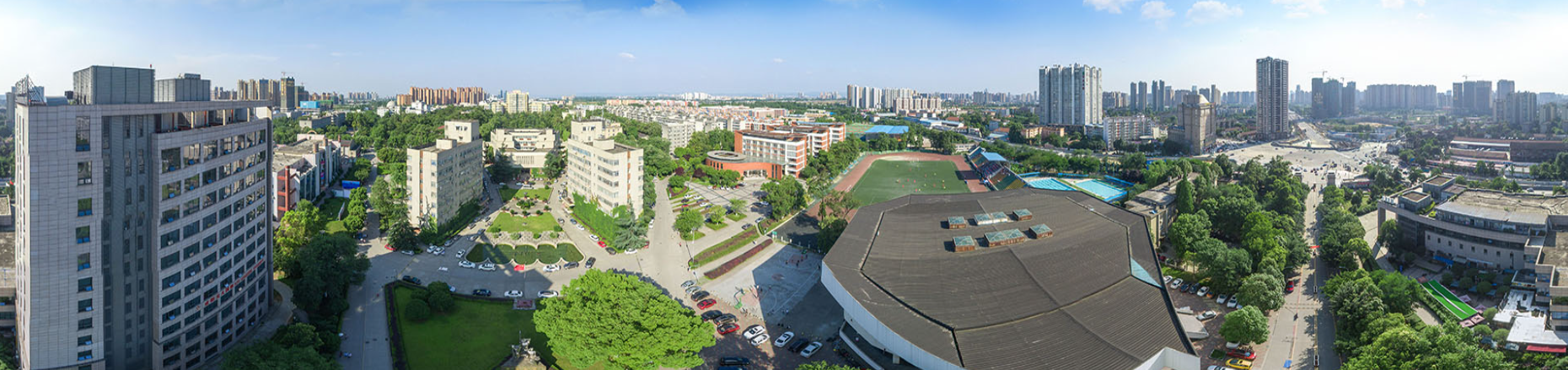
The official launch of the Chinese drilling project for the “International Continental Drilling Program: Integrated Geological Research of the Neoproterozoic Drillings - Ediacaran-Cambrian Transition (ICDP: GRIND-ECT)” was conducted by the Institute of Sedimentary Geology, Chengdu University of Technology, and the International Center for Sedimentary Geochemistry and Biogeochemistry Research on October 2-3, 2023, in Taoershan Village, Zigui County, Yichang City, Hubei Province.
Professor Chao Li, the director of the Institute of Sedimentary Geology and the the International Center for Sedimentary Geochemistry and Biogeochemistry Research, along with his team, attended the drilling commencement ceremony for the Chinese drilling project of the ICDP: GRIND-ECT. The key members of the Chinese team were present at the drilling site, including Senior Engineer Liwei Cui from the Geological Data Center of the China Geological Survey, Professor Chao Li from Chengdu University of Technology, Research Fellow Maoyan Zhu from the Nanjing Institute of Geology and Paleontology, Chinese Academy of Sciences, Professor Shihong Zhang from China University of Geosciences (Beijing), and Professor Graham Shields from University College London.
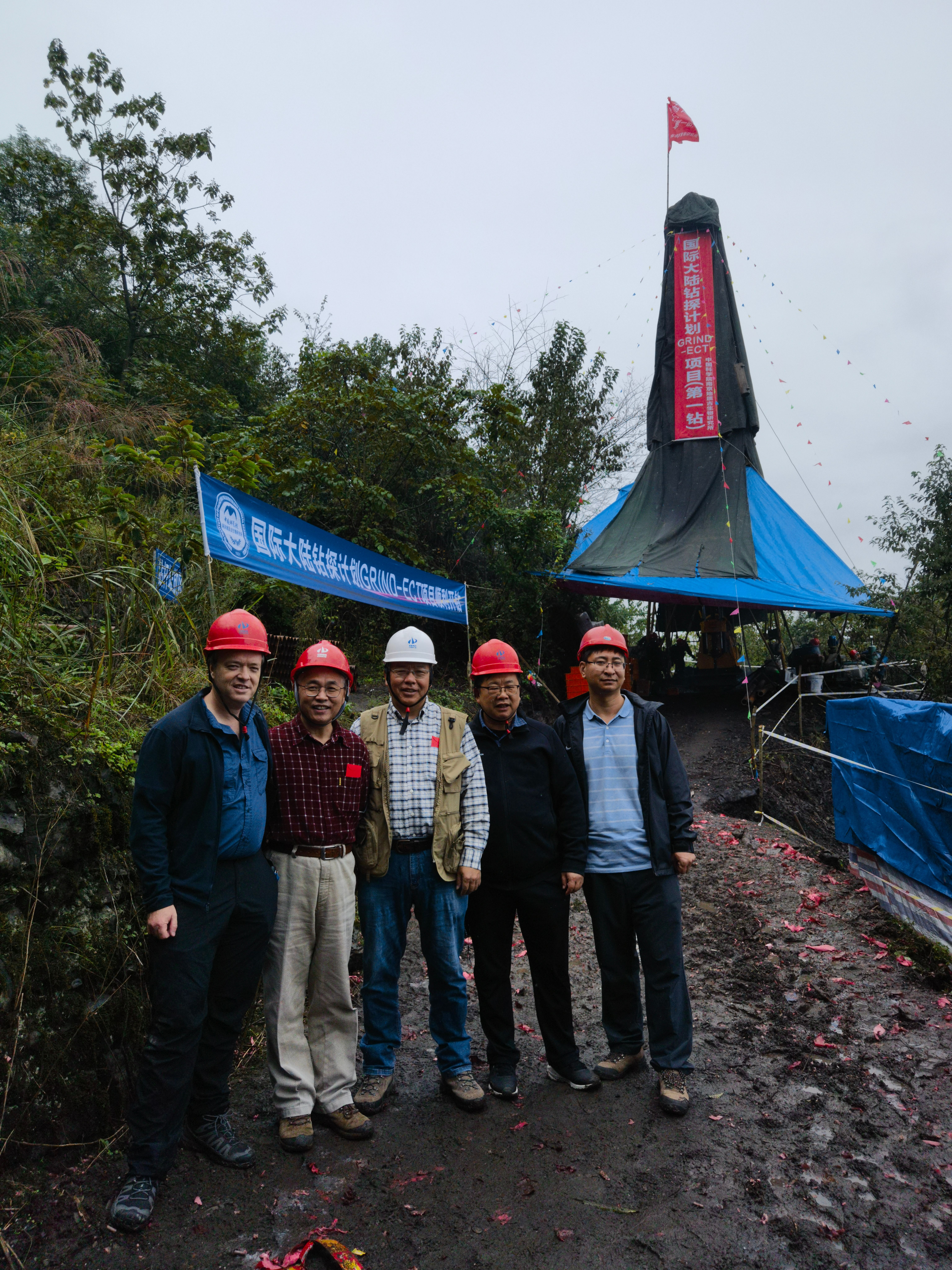
Main members of China project team
The specific drilling targets of the project include the Corumbá Group in western Brazil, the Shuijingtuo Formation, Yanjiahe Formation, Dengying Formation, and Daodushan Formation in southern China, and the Nama Group in southern Namibia, representing the Ediacaran-Cambrian transition period. The goal of the project is to establish a high-precision comprehensive stratigraphic framework of the Ediacaran-Cambrian transition period, construct a well-constrained stratigraphic, paleontological, and geochemical database with a good time framework, conduct comprehensive geological research on the Earth system evolution during this crucial geological period, and produce significant scientific achievements.
The research work related to the Chinese regional sector of the ICDP: GRIND-ECT is mainly conducted in collaboration with the Nanjing Institute of Geology and Paleontology, Chinese Academy of Sciences, China University of Geosciences (Beijing), Chengdu University of Technology, and the China Geological Survey. Research Fellow Maoyan Zhu from the Nanjing Institute of Geology and Paleontology is the chief scientist of the project. It is reported that Professor Chao Li from our center, as one of the key members of the project, is mainly responsible for research work in chemical stratigraphy, sedimentary geochemistry, and biogeochemistry. The team mainly adopts new technologies and indicators such as compound-specific isotopes, Δ47, K isotopes, and Mo isotopes, collaborating with domestic and foreign research teams to contribute to the understanding of major scientific questions related to extreme climate fluctuations during the Neoproterozoic-Early Paleozoic transition, the biogeochemical cycling of key elements, the mechanisms of atmospheric-ocean oxygenation processes, and the coevolution of complex life.
Introduction of the International Continental Drilling Program:
The International Continental Scientific Drilling Program (ICDP) is an international plan initiated in the early 1990s by Germany with the support of the international geoscience community. On February 26, 1996, China, Germany, and the United States formally signed a memorandum of understanding, becoming the first batch of member countries and officially launching the ICDP, with its headquarters located at the German Research Centre for Geosciences in Potsdam, Germany. This program is a scientific drilling plan that covers all fields of geoscience, aiming to coordinate continental scientific drilling activities worldwide, reduce the costs and risks for each country in implementing such activities, achieve results sharing, and promote the application of continental scientific drilling in geoscientific research. The ICDP focuses on challenging research topics in Earth sciences and international socio-economic issues, such as continental dynamics and natural hazards, volcanic and geothermal systems, Earth history and climate change, tectonic collisions, unconventional energy, and deep biosphere. Through unique scientific drilling methods, the ICDP provides precise insights into the composition and structural configuration of the Earth’s crust, which play a crucial role in Earth’s resources and environment.
The “Integrated Geological Research of the Neoproterozoic Drillings - Ediacaran-Cambrian Transition” is an ICDP project launched in 2018, aiming to obtain continuous stratigraphic records of the Neoproterozoic-Cambrian period in China, Namibia, and Brazil, establish a high-precision stratigraphic correlation framework and age model, clarify the biological evolution patterns during this period, and reconstruct paleoenvironments and biogeochemical conditions. The project is led by Professor Prave Tony from the University of St Andrews, Professor Simone Kasemann from the University of Bremen in Germany, and Research Fellow Maoyan Zhu from the Nanjing Institute of Geology and Paleontology, Chinese Academy of Sciences. The drilling in the Namibia and Brazil related regions was completed in 2022. The commencement of drilling in China marks the project’s entry into a fully accelerated phase.