At 23:00 on August 27, 2025, the research team led by Prof. Chao Li from the International Center for Sedimentary Geochemistry and Biogeochemistry Research of Chengdu University of Technology published the latest research titled "Two-billion-year transitional oxygenation of the Earth's surface" in the world's top academic journal Nature. Among them, Dr. Haiyang Wang from the center is the first author, Prof. Chao Li from the center and Prof. Yongbo Peng from Nanjing University are the corresponding authors, and Chengdu University of Technology is the first completing unit.
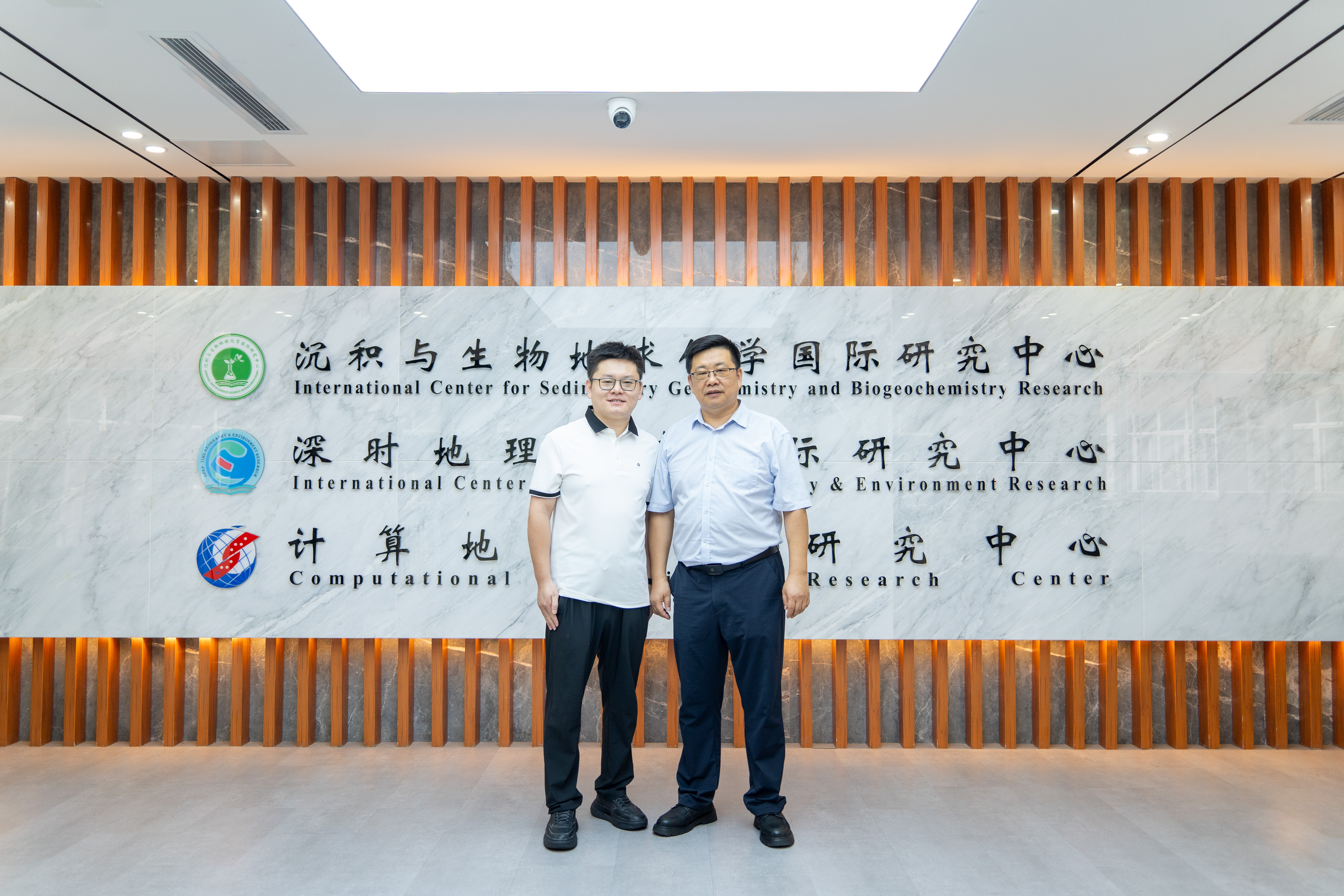
Photo of Prof. Chao Li (right) and Dr. Haiyang Wang (left)
A new study has, for the first time with the most direct evidence yet, revealed how Earth's atmosphere transformed from oxygen-poor to oxygen-rich over a span of about two billion years. By analyzing high-resolution triple oxygen isotope records preserved in ancient sulfate minerals, researchers reconstructed the stepwise rise of atmospheric oxygen and its dynamic interplay with the oceans. This work provides a crucial environmental framework for understanding the origin and evolution of life on Earth, as well as the formation of mineral deposits and petroleum resources.
The rise of oxygen in Earth's atmosphere is fundamental to the emergence of complex life, planetary habitability, and the creation of vital natural resources. Although scientists have long suspected a multi-stage oxygen increase, the precise timing, pathways, and connections with ocean chemistry and biological evolution remained elusive. Earlier studies largely relied on indirect evidence from oceanic redox-sensitive proxies and continental weathering signals, both of which were strongly shaped by local conditions.
In this study, the team employed a novel proxy: the triple oxygen isotope signature (Δ′17O) preserved in ancient sulfate. Because this signal originates uniquely from atmospheric O₂, which is produced through photochemical processes in the stratosphere, it offers a direct archive of past atmospheric oxygen. By systematically sampling across the last billion years and integrating previously published data, the researchers built the most complete isotope-based reconstruction of oxygen evolution spanning the past three billion years.
The results reveal three major episodes of atmospheric oxygen increase—during the Paleoproterozoic, Neoproterozoic, and Paleozoic—culminating in stable, modern-like levels about 410 million years ago. Importantly, following the Neoproterozoic oxygen rise, Earth's largely anoxic oceans underwent periodic oxidation pulses. These events, reflected in synchronized carbon, sulfur, and oxygen isotope shifts over hundreds of millions of years, suggest that increasing atmospheric oxygen repeatedly triggered transient ocean oxidation. Modeling with NEOCARBSULF and O₂–CO₂box frameworks indicates that these episodes consumed oxygen rapidly, acting as short-term (million-year) negative feedbacks. This dynamic reveals a striking contrast: a long-term (billion-year) positive coupling of atmospheric and oceanic oxygenation, overlain by short-term negative coupling, underscoring the complexity of Earth’s oxygenation history.
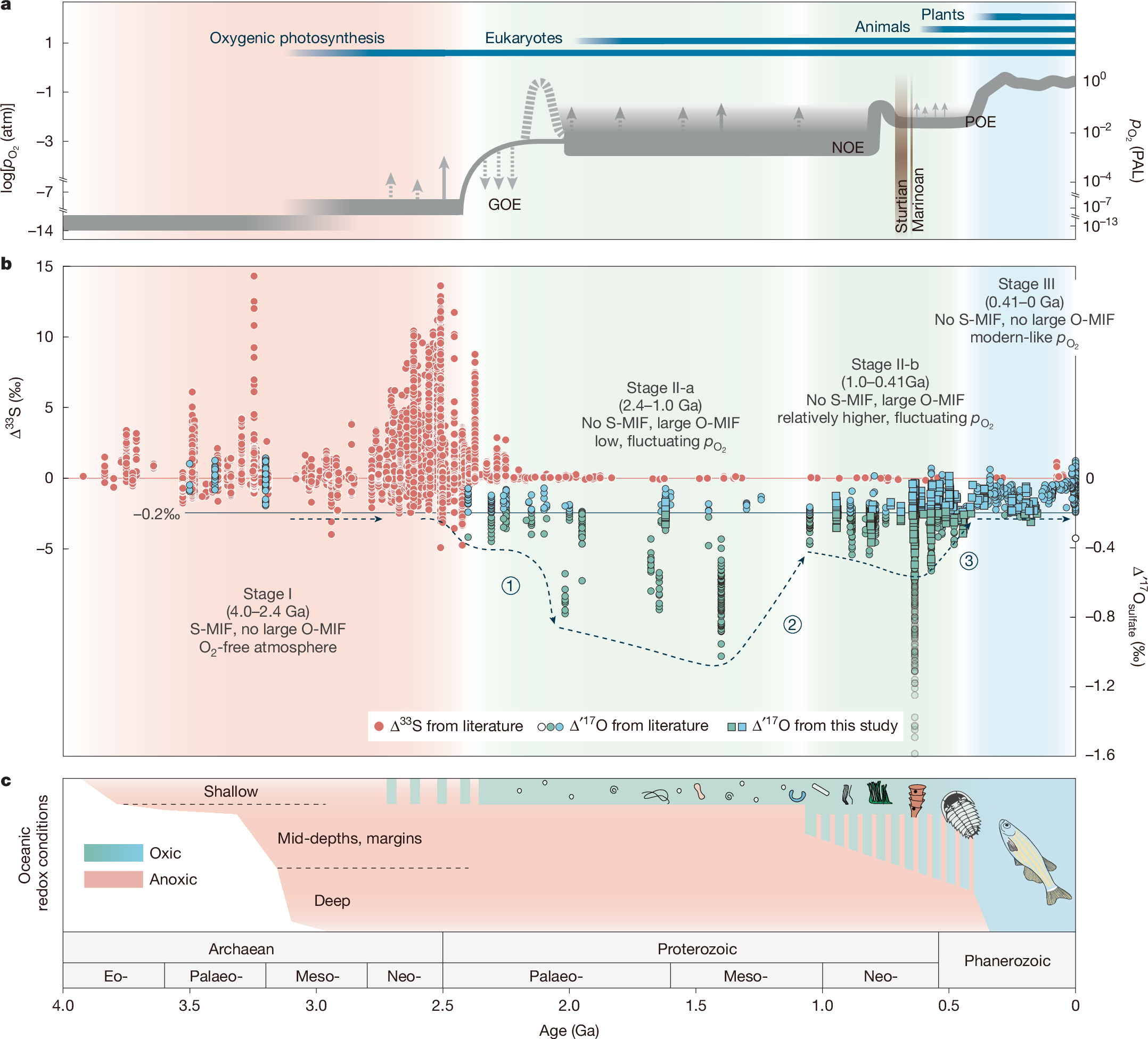
For the first time, the Δ33S and Δ′17O records of sedimentary sulfates deposited over the past 4 billion years have directly depicted the three-stage oxidation of Earth's atmosphere spanning 2 billion years (Figure b). These records reveal both a positive correlation between the oxidation of Earth's atmosphere (Figures a-b) and oceans (Figure c) on an hundreds-of-millions-of-year timescale, and a negative correlation between them on a million-year timescale, as well as the associated biological effects (Source: Wang et al. (2025) Nature).
Overall, the study establishes that Earth’s surface oxygenation unfolded in three stages: a nearly anoxic world before 2.4 billion years ago, fluctuating low-oxygen conditions with stepwise increases between 2.4 and 0.41 billion years ago, and a stable oxygen-rich state thereafter. This framework not only clarifies how Earth became habitable, but also helps explain enigmatic carbon isotope fluctuations from the Neoproterozoic to early Paleozoic, and points to a vast pool of dissolved organic carbon in ancient oceans. Such a reservoir may have contributed to petroleum source rocks, offering new perspectives for deep and ultra-deep hydrocarbon exploration.
The paper, “Two-billion-year transitional oxygenation of the Earth's surface”, was recently published in Nature. Reviewers praised it as “the best proxy record we have for the evolution of atmospheric oxygen levels,” calling it “an extremely complete and well-executed work” that “sets a new benchmark for understanding Earth’s oxygenation history” with broad relevance across geology, paleontology, geophysics, and related fields.
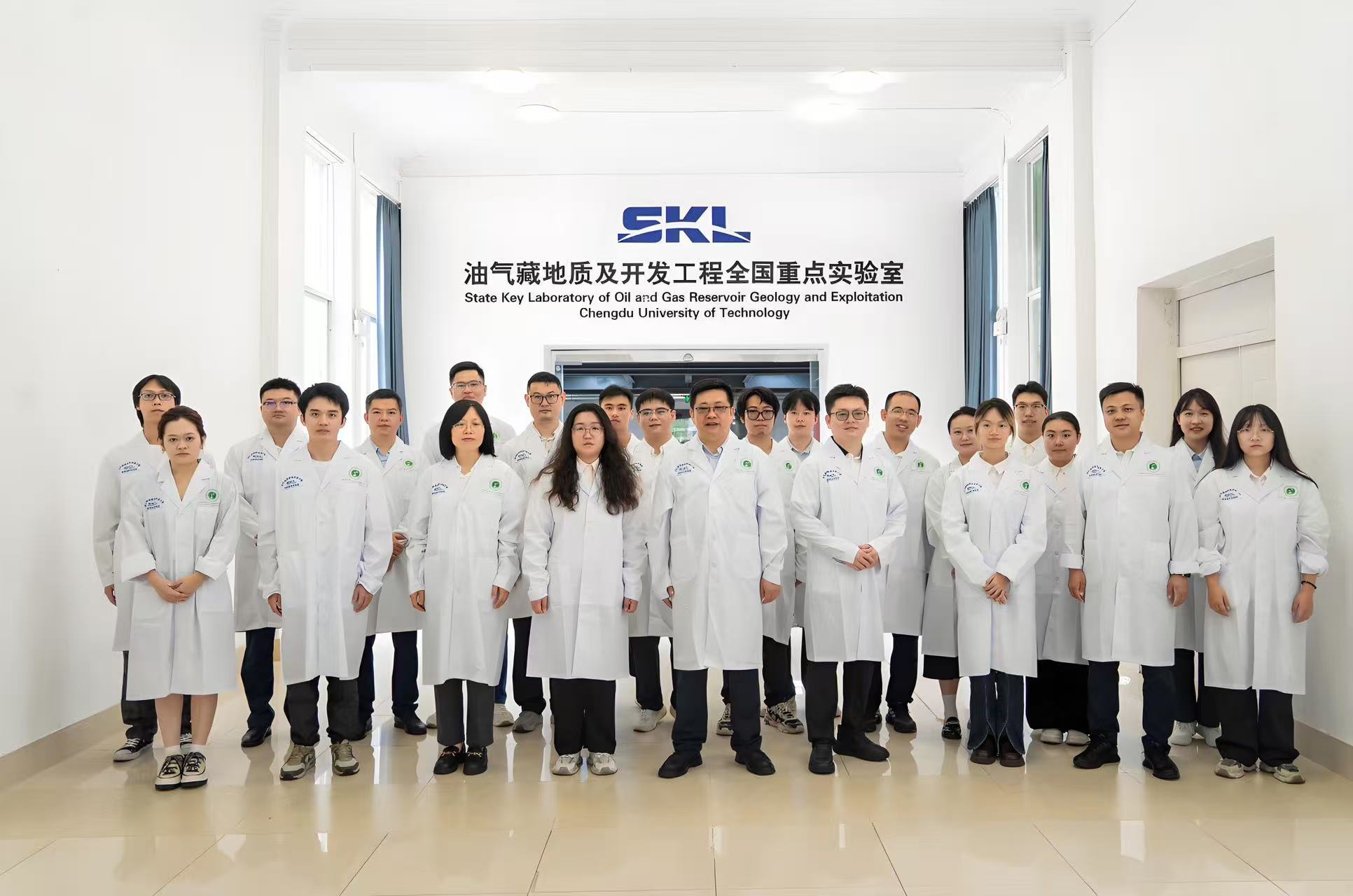
Professor Chao Li's team
Dr. Haiyang Wang (Chengdu University of Technology) is the first author; Profs. Chao Li (Chengdu University of Technology) and Yongbo Peng (Nanjing University) are corresponding authors. Collaborators include Profs. Huiming Bao and Xiaobin Cao (Nanjing University), Dr. Junpeng Zhang and Prof. Wenkun Qie (Nanjing Institute of Geology and Paleontology, CAS), Prof. Timothy W. Lyons (University of California, Riverside), Profs. Mingcai Hou, Meng Cheng, and Dr. Zihu Zhang (Chengdu University of Technology), Dr. Matthew S. Dodd (University of Western Australia), and Prof. Malcolm Wallace and Dr. Ashleigh v.S. Hood (University of Melbourne).